
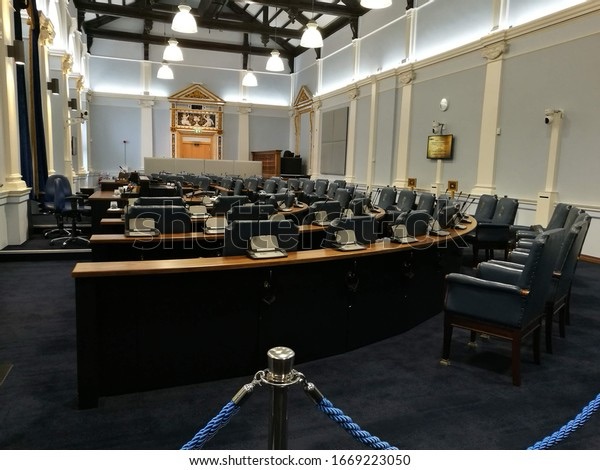
The Seanad Éireann University Panel elections that are taking place this month are the last time that there will be 2 separate 3 seater constituencies. At the next election there will be 6 senators elected in one constituency by voters who register to vote and
- Are an Irish citizen
- Are over 18, and
- hold a degree from one of the relevant institutions
The included institutions are NUI, the University of Dublin – Trinity College and those designated under the Higher Education Authority Act 2022. These are the seven traditional universities, the technical universities, the institutes of technology, the National College of Art and Design and the Royal College of Surgeons in Ireland. (More information here)
If you are a graduate of any of those institutions, I would strongly recommend that you log on to Seanadvoter.ie and get your name on the register to vote.
While there is definitely a need to reform the election process for Seanad Éireann to make it more demographic and more representative, it should be possible to elect more progressive candidates through the two university panels. While electing candidates from a constituency that has done well out of the current system (graduates of the NUI and TCD) probably serves to maintain the status quo, the fact that the number of actual voters is only a fraction of the potential number: TCD has 110,000 alumni – 15,053 (13.5%) of these voted in 2020, and while the NUI colleges have aproximately 100,000 students between them every 3 years, the total valid poll in 2020 was 38,118, which, given that the life expectancy of university graduates is likely to be substantial, would mean that the proportion of NUI graduates was significantly less.
I have followed a few of the recent elections and noted the performance of candidates that could be considered progressive, or focused on environmental and social justice issues.. Sum of all the progressive votes still less than a quota. There is sometimes a degree of disagreement between candidates, who all manage to convince their own cohort of colleagues to vote, but never seem to convince them of the merits of voting for similarly minded individuals.
In my opinion PRSTV can still deliver in this election, although imperfectly. The trick will be convincing voters to transfer in blocks – this election does not have the baggage of political party affiliation that reduces transfers in Dáil elections.
In reality, we need to get more progressive voters registered. People starting their campaigns earlier, even at the election previous to the one they hope to win a seat at, means that they will build their electorate. This has worked successfully for
The other approach is to have a high profile already – this has worked to the advantage of a certain current NUI “status quo” senator and barrister (despite his promises to leave public life in Ireland after losing his Dáil seat.).
A successful Seanad candidate would benefit from a Voracious appetites for networking with appropriate graduates. Constant stream of information (GDPR a barrier – but this is not insurmountable if consenting recipients are convinced) from the Senator or candidate seem to work – for years I was on David Norris’ mailing list and he seemed to genuinely interact any time I contacted him. Another senator , from the NUI panel, has my contact details since the 1990s and is pretty persistent in sending materials. This will alienate some, but will engage others, in much the same way as candidates locally will put literature through doors.
If you are registered to vote in this election literature from many of the candidates will by now have arrived at the address which you have provided, but a full list of candidates for the TCD panel is available here, along with their profiles: https://www.tcd.ie/seanad/candidates/
You can get the NUI list here: https://www.nui.ie/news/2024/SE_2025/PressReleaseSE2025Candidates.asphttps://www.nui.ie/news/2024/SE_2025/PressReleaseSE2025Candidates.asp
In the TCD panel, I will be personally giving higher preferences to Lynn Ruane, Hazel Chu, Sadhbh O’Neill and Ossian Smyth. I will then continue my preferences for Tom Clonan, Katherine Zappone, and possibly Ade Oloborude (I am concerned about her aircraft leasing background in the current climate crisis) Laoise De Brún and Derek Byrne. I will be doing a little more research in the next week.
For the NUI panel (yes, I am registered for both) it is more a case of who I am clearly not going to vote for. Alice-Mary Higgins and Eva Dowling will at this point get high preferences. I am still trying to get my head around the other candidates, and would be happy to hear views in the comments below.


 Oisín Ó hAlmhain