(A slightly longer read than usual)
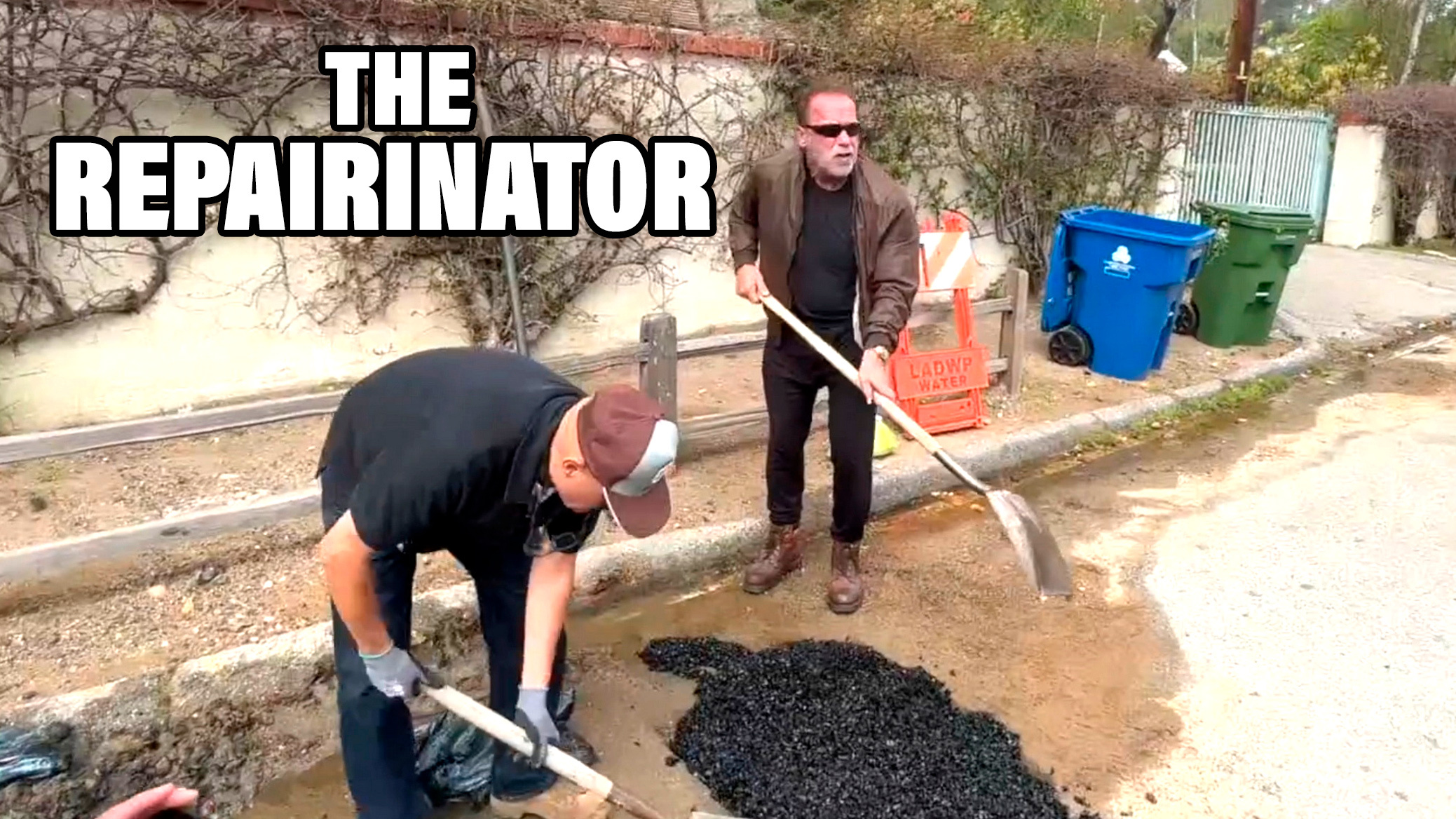
Cover photo Is the actor and politician Arnold Schwarzenegger fixing a pothole in LA, (credit Carscoops.com) full video here: https://youtu.be/wLPBI5c-K2Q?si=HhDSjymVGLTg7hw2
A few years ago a neighbour suggested that I would give a master class to local residents on how to access services from the council, like getting a pothole fixed or a gulley cleared. it was one of those things I never got around to, but looking at it now, I would probably have more to say about how you should be able to communicate with service providers, rather than how you actually can.
I very much believe that governments, in particular local governments should work for the people. At the same time, we are responsible for our environments and should have a “spot it, sort it” approach to problems, which should mean that if we find something that needs improving that it should be easy for us to contact the people who have the responsibility and resources to fix it, which in many cases is the local council.
At the same time, I think that our elected representatives should be working on making sure that the policies of government, local and National, reflect what the people want and need, and should not be spending their time reporting or fixing minor problems that could better be fixed by ensuring the public have access to where they can get answers and action.
We have a long tradition of public reps from government ministers down to local politicians who are trying to get elected to council manipulating the lines of communication between citizen and state to make it look like they themselves should get the credit for a fixed pothole, or getting someone a service that they were already entitled to. (A neighbour is currently under the impression that the reason the council will be repairing the footpath locally is because a government TDs husband took a picture of it while canvassing)
I was very much influenced by the type of ideas shared by Jared Duval in his 2010 book Next Generation Democracy and his ideas that decisions could be made publicly using open source technology. At the time, the United Kingdom had Fix My Street and the 2011 Labour/Fine Gael coalition had a commitment to set something similar up for Ireland.
However, the people behind KildareStreet.com, where you can keep track of what is happening in Leinster House had already set up FixMyStreet.ie and the Labour/FG government went out to reinvent the wheel with FixYourStreet.ie, which wasn’t as good, and was binned after a few years. I instead started using an international service, SeeClickFix.com, which was linked to an app, was transparent and easy to use. I configured my local area so that messages would go to the most appropriate e-mail adresses in the council as well as to local councillors, but the council used the excuse that they were waiting for the governments less transparent system, and despite trying to convince the local electorate to give me a chance to be a city councillor to make more of an impact, I think I only succeeded in annoying council staff.
Individuals within the council from time to time set up initiatives that helped open the lines of communication with the public – at one point there was a Twitter account for the Gully Manager where you could get and give information on blocked drains, but that came to the attention of some sort of manager and disappeared. Then there was (is?) DCC Beta and for a while there were a few other DCC handles that engaged, but with the demise of Twitter these can no longer be found.
I looked back at e-mails recently and found that I have an e-mail thread that goes back 10 years where I was (am) try to find out how the road crossing to my local primary school can be made safer. Specifically, I was hoping for traffic wardens but at this point 2 of my 3 children are now in a secondary school elsewhere.
Dublin City Council now have an extensive (but cumbersome) set up on their citizen hub: https://citizenhub.dublincity.ie which might look like progress, but is it any easier now to get action from the council on the little bits and pieces that make living in the city more pleasant?
The council have provided 2D barcodes on their public litter bins which can be scanned with a phone if you want to report them full (or report damage or fly-tipping) but there doesn’t seem to be an easy way of reporting them if you aren’t in a position to stop and scan the code, for example if you are passing on a bicycle or vehicle, or simply don’t have time to spend (it takes about 4-5 clicks on a phone). You also don’t get any message to let you know that your request has been actioned.
On the other hand, if you do get the PC out to report a street light being out, you do eventually get a message telling you that they are going to fix it.
I currently have 31 requests on the hub, with 19 of them closed and 12 open – these include public bin maintenance requests (not all, as you do not need to log in when making such reports) but mainly requests for public lighting, illegal dumping, graffiti in my estate and what they call “traffic requests.” Traffic requests include any suggestions such as where new bicycle lanes are needed or problematic traffic light sequences etc.
Many of these “closed” reports were closed without any reason being given, or even any contact to discuss the issue. Some were self explanatory: I’m presuming they unblocked the gulleys in Islandbridge as there was no water pooling on the road today, but the report had just disappeared into a black hole like many others,
Occasionally I have had phone calls from council staff where I have reported fly-tipping, but even looking through these forms now is cumbersome as the web page changes format in different reports and there is no clear arrangement of the information.
There is one report of graffiti in my neighbourhood that has remained as an open issue since December 2023, with no contact., only a note on the report to say that it is with the area office.
Some of the traffic requests were closed, and I received anonymous e-mails from a “no-reply” e-mail address with contradictory and conflicting information.
It is as if council staff feel that putting up a wall of resistance will mean that the public simply won’t ask for services, or if they try that they will give up soon enough. If someone with a postgraduate diploma in public service management can’t navigate the system, how does a citizen with less education and contacts?
As a public servant myself, I reject the view that council staff are out to avoid work. Staffing has been slashed by various initiatives over the past few decades as we hollow out the council to reduce taxes for the well-off, but most staff are trying to do their best with the existing resources, and they two have to manage with a creaking poorly designed IT system. It’s more of a culture problem, and this comes from the organisation as a whole.
If we had decision making at the lowest effective level, people would be able to see where improvements were requested from the council, agree or comment on them, and get a decision from the council including a timeline for action (if any). We wouldn’t then have national politicians “fixing” things for people, and they might actually get some proper work done in the Dáil. This might in turn change the incentives around who people vote for, which I think again, might make for a change for the better.

 Oisín Ó hAlmhain