
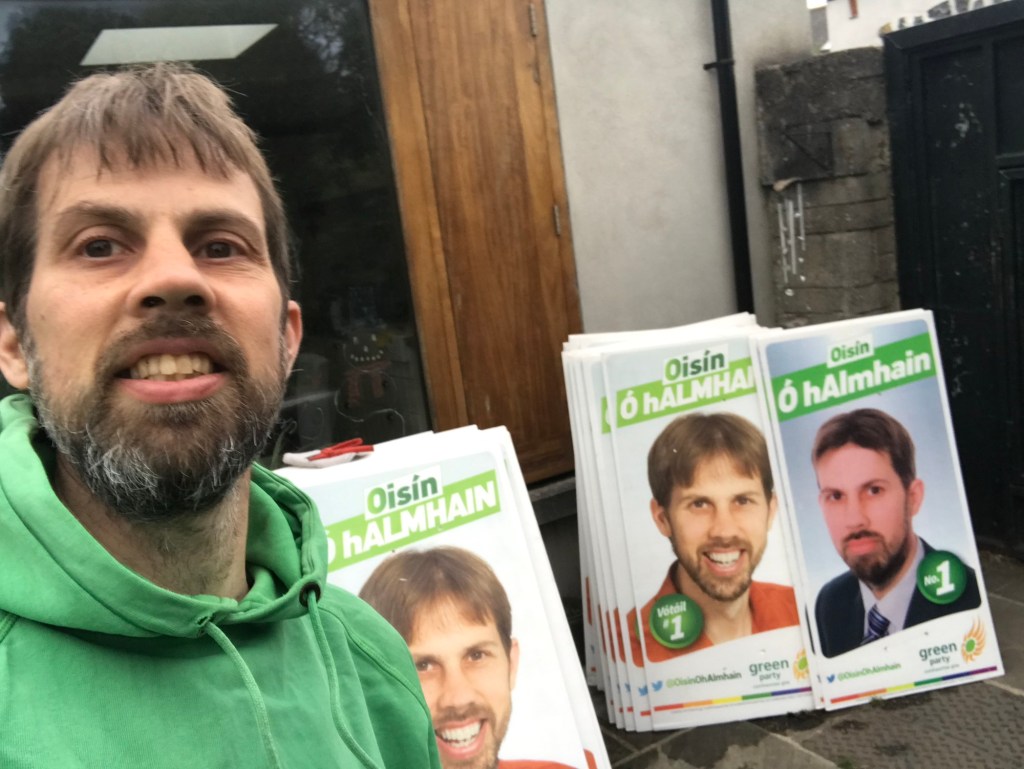
The electoral commission have a consultation open until the 9th of May on whether election posters are something we want or something we don’t want. Around election time there is a lot of talk about them, particularly among people who organise cleanups, for whom the abandoned cable ties can be as big a problem as cigarette-butts, or, up until the recent deposit scheme, plastic bottles.
As you might have seen from my social media feeds, or from this blog post from a decade ago, I am not a supporter of posters, and see them as a necessary evil: if everyone else has them you can’t compete without them.
You can see the consultation from the commission at this link: https://www.electoralcommission.ie/consultation/
Here are my thoughts, as I submitted them to the consultation this evening. Please feel free to comment below, or, better still, make a submission yourself (you will be asked the same 4 questions)
1. Do you see positive aspects/advantages to election posters? If yes, please explain.
Posters add to the colour and let people know that there is an election on. In an era when many people do not get their news from national radio or television, or local/national newspapers, something is needed to make people aware that there is an election on. In 1982, the year of multiple general elections, I was a primary school pupil, and I remember the variety of cardboard posters listing candidates names that were found stapled together on every lamppost. A 10 year old friend had a poster from a rival civil war party upside down on his wall at home, and dotted with stickers from his own side, which, in a way was the beginnings of an interest in politics for a few of us.
With more recent posters featuring the faces as well as the names of candidates, they have been a means of improving the recognition of candidates who might not have a national profile, or a profile outside of their own particular area. It can be difficult for candidates who do not have a large political machine behind them to ensure that the public know that they are running.
2. Do you see negatives aspects/disadvantages to election posters? If yes, please explain.
There are many more negative aspects to election posters. While the 1980s posters were made of cardboard, and as such biodegradable, corrie board plastic posters and cable ties are most certainly not. It is possible to repurpose or recycle a small amount of these posters, but in general they contribute to the massive overuse of single use plastic which is devastating to our economy, and possibly to our health,
Posters also add to the visual clutter of the public realm and can be a hazard to traffic (where they obscure the view of traffic signals or signs), to people with visual impairment, or to wildlife in rural areas where they are place at ground height. They are also frequently places on safety barriers obscuring the view by motorists of pedestrians. They can be untidy, and are often left in poor condition on lamp posts, where they are at risk of falling on passers by or drenching them with rain. In some cases, posters (which are identifiable) are removed leaving cable ties on the lamp post. There is one such lamp post on the Howth Road in Clontarf which still has it’s cable ties almost 6 months after the election.
Posters also protect the status quo in politics, as the established parties have much bigger budgets to spend upwards of €10 per poster and smaller parties elected representatives will have the ability to recycle posters from previous campaigns. A significant amount of money is spent on posters. even in the period before elections when spurious posters are erected advertising “public meetings” where the aim is to show the candidates face publicly rather than hold any kind of meaningful consultation with the public.
Over the past 20 years there has been a huge proliferation in the number of posters, and a move towards having so many posters that there is little space left for other candidates to display theirs. In 2011 candidates in Dublin South Central had 50-150 posters each. By 2014, a local election candidate in Fingal had 750, while in 2024 it was not unusual for many general election candidates to have 5-600 each.
The current setup also expects self regulation from the candidates in terms of adhering to guidance. Even though the ESB comes out during every election, and sometimes writes directly to candidates, there are no shortage of posters on electrical poles. Posters are routinely left on poles which also include traffic signs, and in places which block traffic signals, such as this one pictured in 2014: https://x.com/oisinohalmhain/status/457231194980360192?s=61 (the party when contacted did not move it). There does not appear to be any meaningful regulation by the council under the litter laws, except for after the elections, and many dirty tricks take place between candidates.
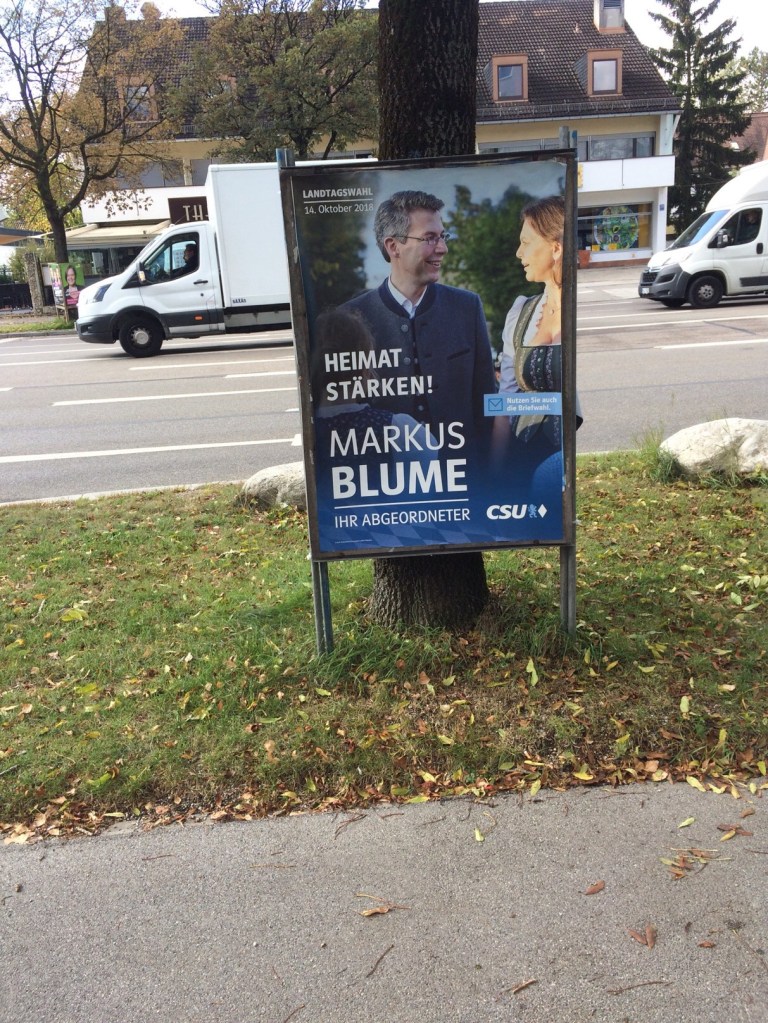
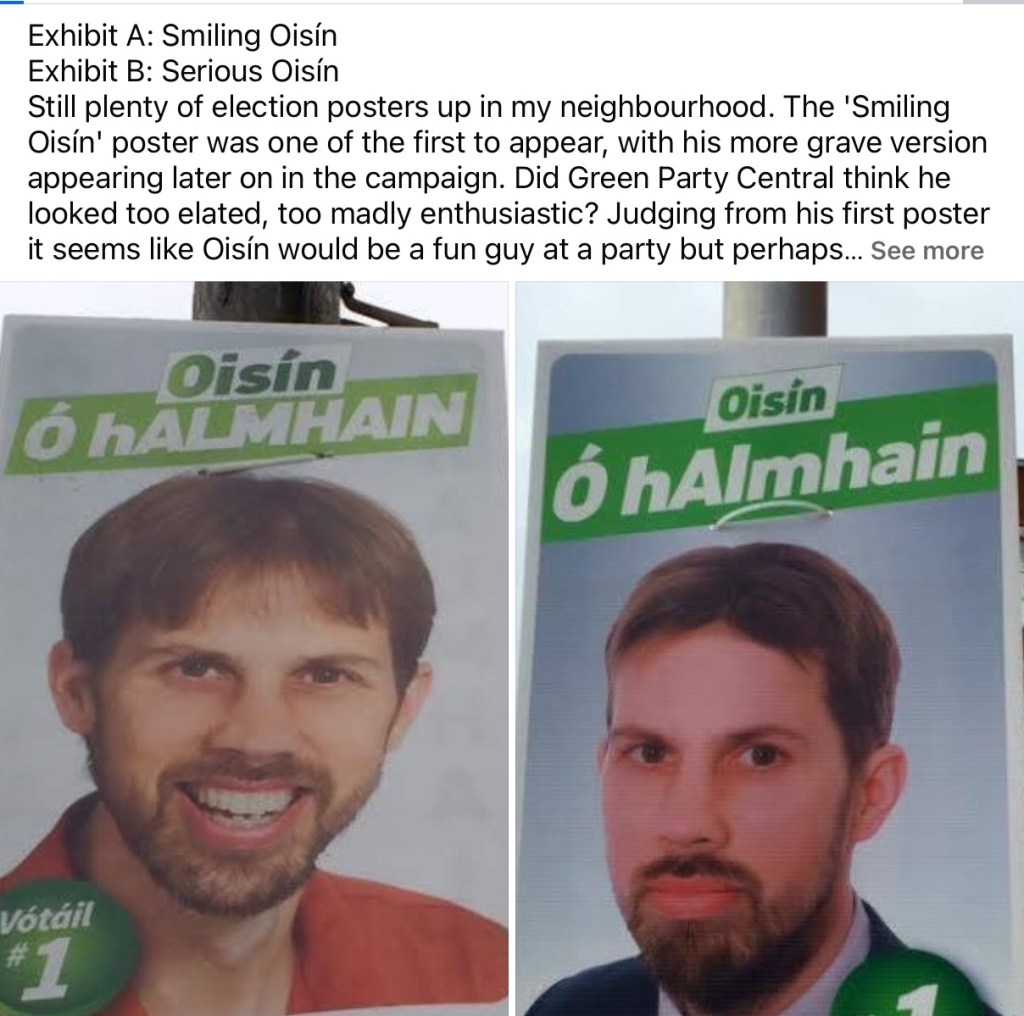
Finally, the idea that people should be voting on the basis of what a person looks like (and in some cases some substantial enhancement is made to the candidates appearance) does not make for a rational way to choose the best candidate. Posters encourage this, as well as the comparison between candidates, although perhaps the “Election Rides” websites such as https://www.instagram.com/irishelectionridesagain/?hl=en should be in the advantages box above. Equally, statements and slogans that have been displayed on posters with no requirement for accuracy or independent verification should not be the basis of who people vote for.
3 Do you think Ireland’s rules and approach to election posters should change? If yes, please explain the changes you’d like to see and the reasons for this.
- There are better ways of ensuring that the public know that an election is on and encouraging involvement. I think that the rules and approach to election posters should change drastically. It should be possible to display posters in one place in each local electoral areas, giving candidates equal billing and randomising the order in which they appear on each billboard. Candidates should be allowed no additional posters. If it was felt appropriate, new candidates could be afforded twice the space of existing candidates, but on the same billboard.
- Alternatively, or additionally, a “referendum booklet” style mailing could be sent to each household with the name and picture, and answers to the same set of questions by all candidates. The questions should be relevant to the office being voted for, and, for example, issues of national importance would not be relevant to a local election.
- If posters were not to be curtailed in these ways, it would be appropriate to put in place a system where posters are regulated during the election period, by an independent party, that the numbers of posters be seriously curtailed, and that ways of ensuring that the posters and cable ties are more sustainable (biodegradable) should be introduced. In such a case, there should be a maximum number of posters in any given area, and they should be confined to major roads and shopping areas, and not placed in housing estates.
4. Is there anything else you would like to say about the use of election posters in Ireland?
- Not an advantage as such, but some of the colour that election posters bring to people, and for the amusement of those processing these submissions, here is a post from Facebook after the 2016 elections: https://www.facebook.com/search/top?q=happy%20oisín%20election%20poster

 Oisín Ó hAlmhain